01.14.26Lauren Burke of Angleton (TX) ISD Shows You How to Use Means of Participation to Optimize Student Thinking
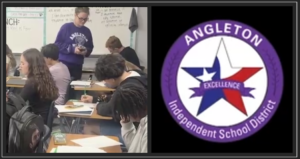
What a pleasure to get to share our newest clip with you all. It’s a bit of teaching gold from Lauren Burke at Angleton Junior High in Angleton, Texas.
The term Means of Participation (MOP) is key to unlocking what’s so great here. The idea is that how students answer a question is often as important as the question itself. If a teacher can use familiar ways to answer questions that cause desirable difficulty and a bit of accountability–everyone feels obliged to think hard about the questions– she can accelerate learning. Especially if she can make those ways of answering questions (MOPs) a habit.
The most common Means of Participation are: Cold Call, Turn and Talk, Volunteers (i.e. letting students raise their hands), Everybody Writes and Call and Response.
Folks in Angleton have been working on the “MOP Sequences”–that is, linking these ways of answering questions to optimize student thinking and accountability.
And you can see how Lauren does a beautiful job of that here:
She starts with Everybody Writes…. it’s pencil to paper for every student… everyone solves the problem. [She circulates carefully to make sure and to do a bit of relationship building].
But she’s also prepared them: Be ready to answer questions about your work. By “at random” she means, “I’ll Cold Call you.” In other words, Do your best work during this two minutes because you’re accountable. But also when she does Cold Call she knows her students will be prepared.
Next she uses a Turn and Talk. Students review their answer with a classmate. The room explodes to life! You can tell that students are familiar with her routines and that they are prepared and have lots to talk about. And of course students feel the energy too! They’re reminded that everyone is talking about the math so if they are asked to answer, it’s natural for them to be into it too.
Next she Cold Calls…. six students in all. Everyone gets to explain a small part of the answer. By splitting the answer up into small pieces she can call on lots of students, make everyone feel important and accountable, and imply–in case anyone was wondering– that Cold Call is not a gotcha. It’s something that happens to everyone.
She keeps the tone light with her easy tone of voice and when one student gets the answer wrong (2 times negative 3 is negative 6) her tone doesn’t change. Message: I want you to be successful.
This widespread Cold Calling also allows her to Check for Understanding efficiently. If she only relied on students who wanted to raise their hands to tell her the answers, she’d get a false positive… she’d think her students knew more than they did. By Cold Calling and choosing her own sample, she gets a much better picture of what students know, all they while keeping everyone engaged and attentive.
What great teaching from Lauren, and what lucky students down in Angleton to have a teacher who keeps them learning and growing by paying attention to who answers and how!
Angleton ISD shared this clip with us as part of a year long partnership we launched in July 2025. Want to learn more about cultivating bright spots in your organization to scale excellent instruction? We’d love to connect! Contact us here.
 Angleton ISD, cold call, Lauren Burke, means of participation